Intent
What are they looking for? Reveal the people, projects and assets they pursue through their searches and choices.
Reconnaissance-focused cyber deception
Simbotnik draws attackers into connected decoys built around your people, projects and assets. See what they want, how far they’ll go and what they can do—then defend what matters most.
Built on more than 25 years of experience in cybersecurity, telecommunications and threat intelligence.

The approach
A person. A location. A project. An asset. Reconnaissance follows connections between them.
Simbotnik creates a controlled environment of connected decoys for that research to unfold. Define the paths worth watching and the actions that matter, then examine how visitors discover, explore and return to them.
See what a visitor wants, how determined they are to get it and what they can actually do. Use that evidence to prioritise investigations, review exposed information and strengthen the controls protecting the corresponding real assets.
Deployed outside production. Built to reveal reconnaissance before it reaches your real assets.
What are they looking for? Reveal the people, projects and assets they pursue through their searches and choices.
How far will they go? Follow repeat visits, deeper exploration and attempts to reach protected material.
What can they do? See which barriers they overcome, what they access and what they take.
How it works
Create a controlled environment outside production, make a discoverable trail available and observe the recorded activity that follows.
Build a controlled environment around the people, places and things that form the subject of reconnaissance.
Publish selected breadcrumbs and paths for research to uncover, while keeping the decoy environment outside production.
Capture discovery, navigation, internal searches and return visits inside the controlled environment.
Rank leads by intent, persistence and capability. Focus your team on the activity that deserves attention.
Put findings to work in your threat intelligence stack through STIX and TAXII.
Engagement analysis
Know what draws attackers in, what keeps them coming back and how far they get. Turn that insight into sharper investigations and stronger defences.
Define meaningful actions within a decoy environment, such as reaching a particular page or following a selected breadcrumb. See which visitors reach those milestones.
Map the route from initial discovery to deeper exploration. Identify where visitors continue, abandon the trail or reach a goal.
See who attempts protected access, who gets through and what they download.
Inspect the terms visitors enter within the decoy environment. Understand which people, places and subjects they actively seek.
Connect navigation paths and recorded return visits. Examine the sequence behind an individual interaction.
Prioritise persistent, capable attackers. Use what they pursue to uncover exposures and strengthen the assets they target.
Product evidence
Design the decoy. Follow the attacker. Deliver the intelligence. One workflow from reconnaissance to response.
Build convincing websites, protected content and discoverable trails around the assets you want to defend.
Bring searches, access attempts and downloads together into a clear picture of attacker activity.
Publish Observed Data and reviewed Indicator, Sighting and Note objects through a tenant-scoped TAXII 2.1 collection.
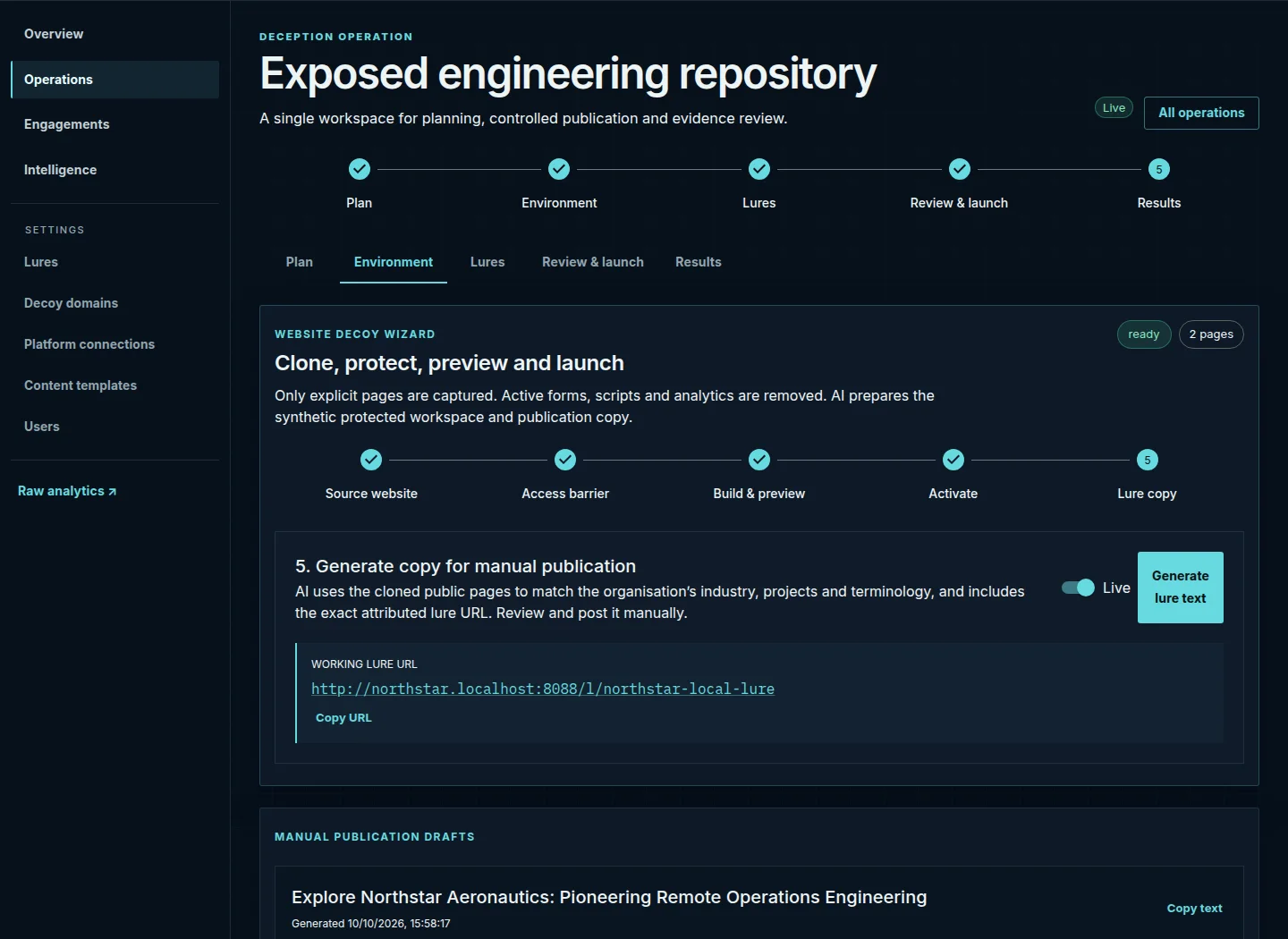
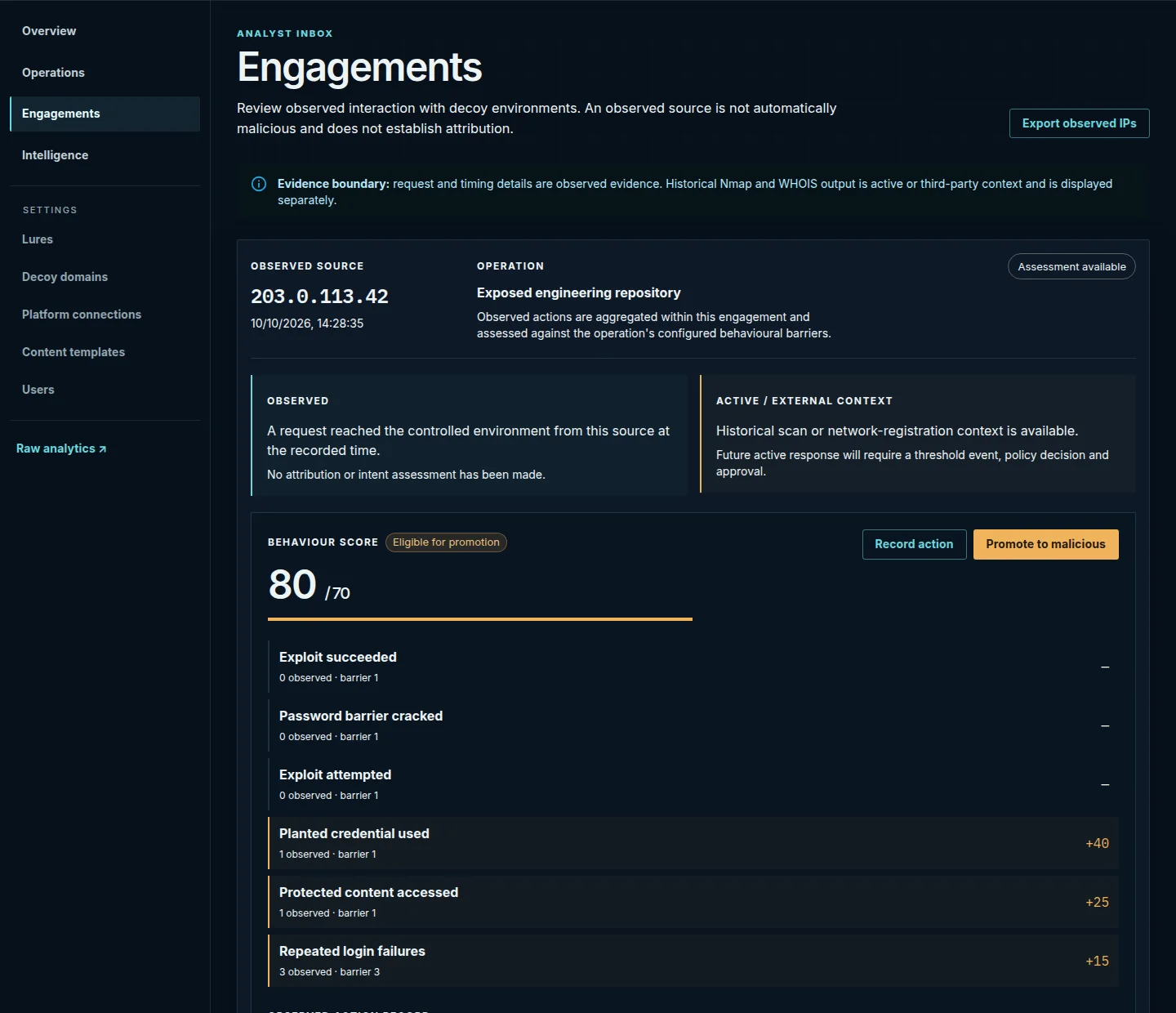
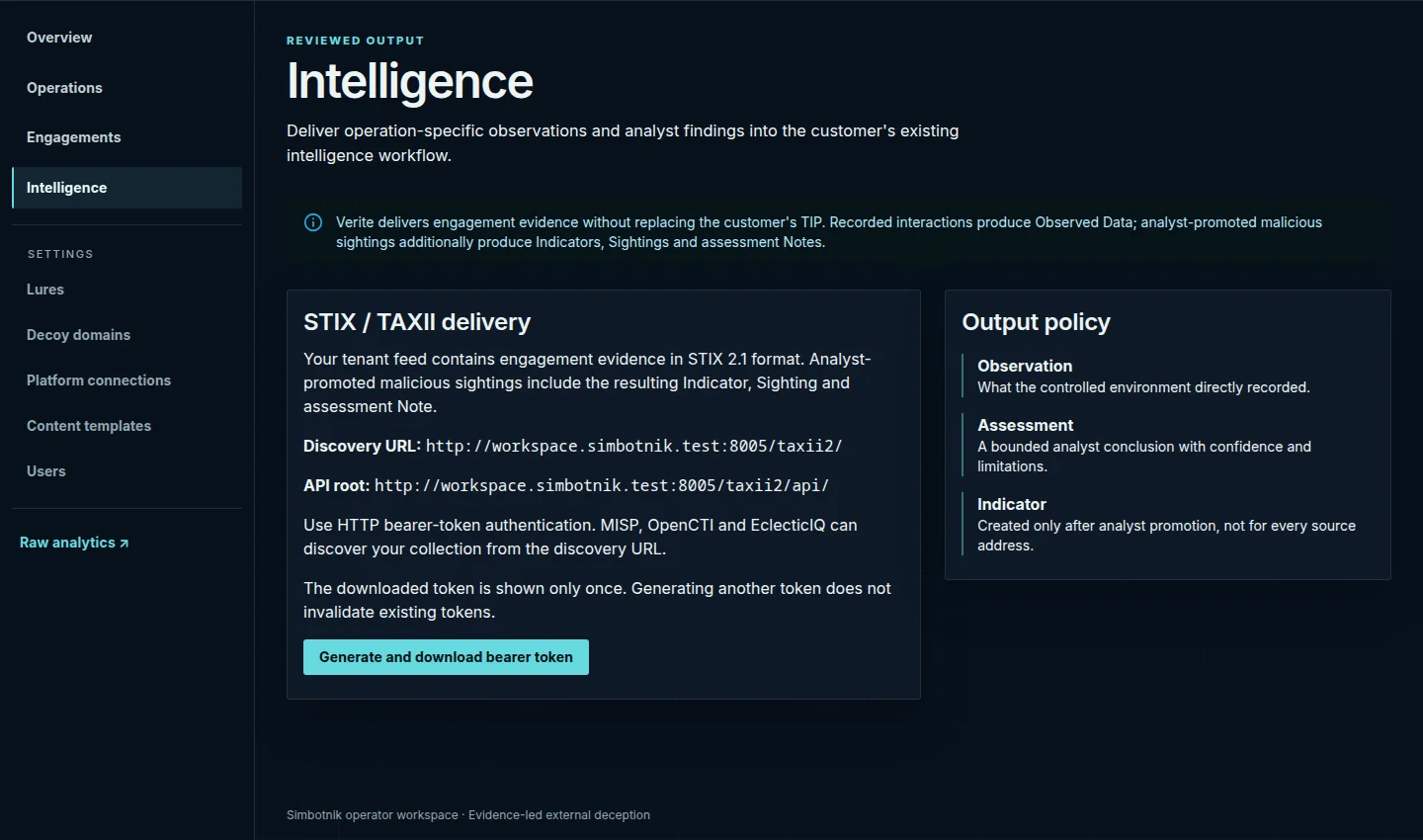
Product screenshots use demonstration data.
The model
Simbotnik creates connected decoys around people, places and things for a researcher to discover and explore, then examines recorded activity through that controlled environment.
Build website decoys from selected public pages, complete with protected content and unique lure links. Connect them around the people, projects and assets attackers are researching.
Turn attacker actions into ranked investigation leads. Scoring brings intent, determination and capability into focus, with the activity behind each score a click away.
Find out which sensitive subjects attract attention, expose the information helping attackers and reinforce the assets they pursue. Give your team a clear starting point for investigation and defence.
Recorded interactions produce STIX 2.1 Observed Data. Analyst-promoted findings additionally produce Indicator, Sighting and assessment Note objects, available through a tenant-scoped TAXII 2.1 collection.
The briefing covers operation design, decoy preparation, engagement scoring, STIX/TAXII output and the requirements for evaluating Simbotnik in your environment.
Experience
Simbotnik's founder brings more than 25 years of experience across telecommunications, cybersecurity and threat intelligence, including hands-on work with government and military customers. That background informs the product's focus: collecting useful evidence, understanding adversary behaviour and delivering intelligence that security teams can act on.
Private briefing
Walk through a private decoy preview, recorded engagement, investigation-lead qualification and STIX/TAXII delivery, then discuss how an authorised evaluation could be shaped around your organisation.
The product is in active development. Private demonstrations are available.
For investment enquiries, use the same form and select Investment.